Reviews By TeKay, Kimberly Raschka Sailor, and Stephen Lanza
December 21, 2025
| Tuning / Blend | 4.7 |
|---|---|
| Energy / Intensity | 4.7 |
| Innovation / Creativity | 3.3 |
| Soloists | 4.3 |
| Sound / Production | 4.7 |
| Repeat Listenability | 3.3 |
| Tracks | ||
|---|---|---|
| 1 | All the Time in the World | 4.3 |
| 2 | Make it Better | 4.0 |
| 3 | Birds of a Feather | 4.7 |
Recorded 2025
Total time: 09:26, 3 songs

TeKay
4| Tuning / Blend | 5 |
|---|---|
| Energy / Intensity | 4 |
| Innovation / Creativity | 3 |
| Soloists | 4 |
| Sound / Production | 5 |
| Repeat Listenability | 3 |
| Tracks | ||
|---|---|---|
| 1 | All the Time in the World | 4 |
| 2 | Make it Better | 4 |
| 3 | Birds of a Feather | 5 |
Sometimes you just want a crisp and cool snippet of music to tide you over or get you through a spell. Just a soupçon to help quench your thirst for creativity. And the Juxtaposition men are excellent at delivering a satisfying morsel of music. This most recent EP, Bloom, sits in a particular pocket that is pleasing and comforting to the listener with warm crooning tones over some pulsating rhythmic beats and background vocals.
This ICCA 2025 set recording gives a softer side of Juxtaposition than albums of the past. Even with the explicit lyrics of Billie Elish's Birds of a Feather there is a gentleness that even the most staunchly conversative grandparent would forgive if played at the family meal on Sunday. And it's not from a lack of dynamics; there are excellent swells here and there throughout the album. The musicality in the opening track is a little misleading though because of these excellent dynamics ... there is a grand crescendo in the introduction that leads to a sort of unexpected tonal and rhythmic shift for All the Time in the World. And the same stylistic set up actually occurs again for the introduction of Make it Better. I wasn't familiar with either of the original tracks before this, but a quick comparison noticed a big deviation from the style choices of Stephen Day and Anderson .Paak. While not overly jarring or incorrect from a creativity standpoint, I do think that this approach for the introductions of those two songs works better live as transitionals between performance moments than they do in this recorded environment.
Harry Rosson is adept at creating engaging and effective roadmaps to sound in his arrangements for the group. He penned all three of the arrangements and you can see both the commonalities and distinctions he has applied from his toolkit. Rosson's use of alternating and layered staccato and legato moments throughout keeps the ear in an active listening mode.
Birds of a Feather brings all of the elements of the first two tracks into a culminating moment of perfection for the group. Will Evenson's solo interpretation is both grounded and personal. The little tiks and inconsistencies in his singing during the transitions in his passagio provide a superior level of authenticity and emotion to his performance. The production serves the audience an extra bit of love from every blip. Again the only puzzlement is its placement within the set and also the ending of the EP. I know I'm twenty years out of producing the ICCAs, but it seems a bit anticlimactic for a competition, though completely fine for the track in isolation.
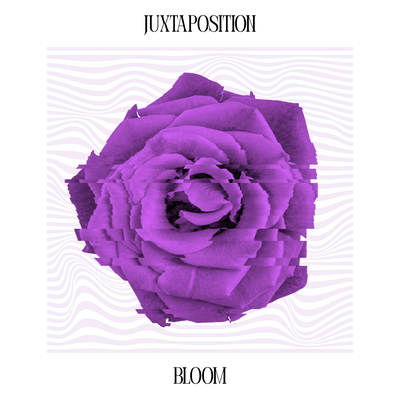
The purple rose is my second favorite flower, so while Bloom isn't my favorite Juxta recording by a long shot, I do have a lot of awe and admiration for the guys with what they've produced. Pick you up this bouquet of an album and have a wonderful afternoon.

| Tuning / Blend | 5 |
|---|---|
| Energy / Intensity | 5 |
| Innovation / Creativity | 4 |
| Soloists | 4 |
| Sound / Production | 4 |
| Repeat Listenability | 4 |
| Tracks | ||
|---|---|---|
| 1 | All the Time in the World | 5 |
| 2 | Make it Better | 4 |
| 3 | Birds of a Feather | 5 |
Juxtaposition keeps doing what it does best: showing off the group's damn good singing, the kind you can sit with all day. Since Bloom is an EP, you'll have to keep this one on repeat to fill out the hours. So be it.
All the Time in the World starts with a growing, euphoric sound explosion before the lead pleads, "I need you to come home soon." This listener was completely invested immediately. The backs have plenty to do with Harry Rosson's arrangement and deliver with precision and pizzazz, heading straight into tricky rhythms, close dissonance, and all dynamic levels like a confident running back who just got the ball. Locked and loaded, look out. All the Time in the World is also a harder chart than many of their peers attempt, and illustrates why this group continues to dazzle and win.
We get a fun bounce and effective swagger from the singers in Make it Better, with an unexpected shift from Rosson to put a bow on the end of the track. I do wish the percussion was adding a true voice to the mix instead of long, similar patterns to give the track more distinct highlights and flair. Drums need space to shine.
To close Bloom, we're treated to an amazing lead voice in Will Evenson that seems to stretch across genres — an irresistible classic crooner with a biting modern pop sound — giving this track a timeless feel. His delivery is equal parts earnest conviction and doting charm. Like the first track, we hear excellent musicianship from the backs, who demonstrate high technical proficiency alongside their beautiful stylings. Darling little bird noises close this one out, rather unfortunately; would like another seven tracks from arranger Rosson with skillful Juxta executing the vision, but we have to accept what we get.
As usual, impressive stuff. Give Bloom a spin and enjoy.

| Tuning / Blend | 4 |
|---|---|
| Energy / Intensity | 5 |
| Innovation / Creativity | 3 |
| Soloists | 5 |
| Sound / Production | 5 |
| Repeat Listenability | 3 |
| Tracks | ||
|---|---|---|
| 1 | All the Time in the World | 4 |
| 2 | Make it Better | 4 |
| 3 | Birds of a Feather | 4 |
Bloom feels very encapsulating of what I recall from my days in a lower-voiced collegiate group. The music is fun and bouncy. It's easily digestible by the listener. Some subtle hinting in the lyrics, a charismatic frontman, and a little wink are all it takes and half the audience is swooning. Listening to this release, I can understand the approach the group has and I can give a ballpark assumption of the level of success. However, something isn't transferring from the speakers. Whenever I listen to this EP, I find myself bored quickly.
Bloom has a distinct lack of big moments; not from a lack of presence, but a misstep of execution. These moments should exist, but they don't show up. There should be a big moment around the 2-minute mark in All the Time in the World. It's a very classic big chord delayed by one beat to add suspense. However, this track is plagued by the same chords and voicings. Those chords sung in the bridge are the same ones in the first chorus. There's no new low bass note to add depth to the sound, no high tenor notes to stretch the chords, and very few unique color notes to add richness to the big moments. What should be a culmination of two minutes of idea exploration and growth circles back to what we've already heard. This is an issue that permeates across all three tracks. By the time the EP is done, I've already forgotten most of the music. These pieces are missing a truly impactful moment to keep me invested in the music long after the last note is sung.
Despite the flaws across Bloom, there's still plenty to love. The soloists are all charismatic and capable storytellers. The group is energized and engaging while singing the vocals. The production is solid. This album is technically correct, just an imperfect execution. For such a small offering from a group with a history of excellence in recorded a cappella, it wouldn't surprise me if this is just too small of a subset of data to say it's anything other than a fluke. Take a listen, enjoy it for what it is, and I'll look forward to Juxtaposition's next release.